The 2026 crime story of Eddie Tipton and the rigged $16.5 million Hot Lotto draw
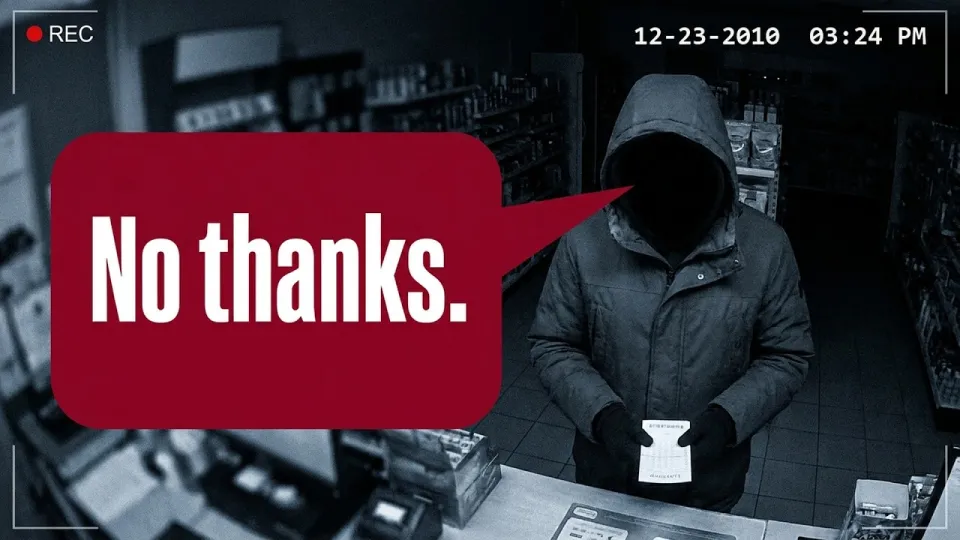
Video: He Rigged the Lottery. Two Words Gave Him Away. (crime story)
· based on the channel Max Crime
The crime story of Eddie Tipton is a case of a lottery insider who rigged a $16.5 million Hot Lotto draw and was ultimately caught because of two ordinary words: "No thanks." Tipton, the security director for the Multi-State Lottery Association (MUSL), had written the code that generated winning numbers and was barred from playing. His scheme unraveled when a store recording and a careless phrase exposed him, leading to a 2017 guilty plea.
The $16.5 million Hot Lotto ticket nobody claimed
In December 2010, a Hot Lotto ticket bought at a Des Moines convenience store matched all six numbers for a $16.5 million jackpot. For nearly a year, no one came forward. Under Iowa lottery rules, winners had one year from the draw date to claim the prize. As the deadline approached, the ticket remained unclaimed, prompting speculation that the buyer had lost it or was unaware of the win. The ticket's numbers were generated by a random number generator (RNG) used by MUSL, the organization that runs Hot Lotto and other multi-state games. Tipton, as MUSL's security director, had access to the RNG and had written its code.
The anonymous trust and the missed deadline
Just over an hour before the one-year deadline, a lawyer representing an anonymous trust turned in the ticket. The trust sought to claim the prize while keeping the winner's identity secret. However, Iowa law requires lottery winners to disclose their names, and the trust's attempt to remain anonymous raised red flags. Investigators began looking into the ticket's origins. The store's security camera footage showed the buyer, but the video quality was poor. The case stalled until 2014, when the Iowa Division of Criminal Investigation released enhanced footage to the public.
How "No thanks" exposed the lottery rigger
The released video showed a man buying the ticket and, when asked if he wanted a receipt, replying "No thanks." Coworkers at MUSL recognized the man's voice and his distinctive gait. The man was Eddie Tipton. Further investigation revealed that Tipton had purchased the ticket and then attempted to claim it through a friend. The phrase "No thanks" became the key piece of evidence that linked Tipton to the crime. His position as security director meant he knew exactly how the RNG worked and how to manipulate it.
The rootkit and the rigged random number generator
Tipton had installed a rootkit on the MUSL computers that generated lottery numbers. The rootkit allowed him to predict and control winning numbers for specific draws. He used this knowledge to buy winning tickets in multiple states, including Hot Lotto. The scheme required precise timing: Tipton set the RNG to produce a specific sequence on a specific date, then bought a ticket with those numbers. He recruited accomplices to claim the prizes in different jurisdictions to avoid suspicion. The $16.5 million Hot Lotto ticket was one such attempt, but it failed when the anonymous claim drew scrutiny.
The trial, the appeal, and the 2017 guilty plea
Tipton was arrested in 2015 and charged with two counts of fraud. During the trial, prosecutors presented evidence of the rootkit and Tipton's access to the RNG. He was convicted and sentenced to 10 years in prison. Tipton appealed, arguing that the statute of limitations had expired, but the Iowa Supreme Court upheld the conviction. In 2017, Tipton pleaded guilty to ongoing criminal conduct and acknowledged manipulating the lottery equipment. He was ordered to pay $2.2 million in restitution. The $16.5 million prize was never paid on that claim.
What the Tipton case reveals about lottery security
The Tipton case exposed vulnerabilities in the lottery industry's internal security. It showed that even insiders with technical expertise could exploit their access for personal gain. Following the scandal, MUSL and state lotteries implemented stricter controls, including enhanced background checks and random audits of RNG software. The case also highlighted the importance of public vigilance: the release of the CCTV footage was instrumental in identifying Tipton. For true crime enthusiasts, the story remains a compelling example of how small details—like two words—can bring down a sophisticated scheme.
Conclusion: the crime story that changed lottery oversight
The crime story of Eddie Tipton is a reminder that even the most carefully planned fraud can be undone by a simple slip. His attempt to hide behind an anonymous trust and a rigged RNG failed when he uttered "No thanks" on camera. The case led to significant reforms in lottery security and remains a cautionary tale for insiders everywhere. For a detailed video breakdown of this case, watch the Max Crime channel's documentary, which reconstructs the investigation using court records and news footage.
Key takeaways
- Eddie Tipton was the security director at the Multi-State Lottery Association (MUSL) when a $16.5 million Hot Lotto ticket was bought in Des Moines in December 2010.
- Tipton had written the random number generator code and was not allowed to play lottery games.
- The winning ticket was claimed through an anonymous trust just over an hour before the prize expired.
- Investigators released CCTV footage in 2014; coworkers recognized Tipton's voice and the two words 'No thanks'.
- Tipton was convicted in 2015, appealed, and pleaded guilty in 2017 to tampering with lottery equipment.
Questions & answers
Who is Eddie Tipton?
Eddie Tipton was the security director for the Multi-State Lottery Association (MUSL). He wrote the code for the random number generator used in lottery draws and was later convicted of rigging several lottery games, including a $16.5 million Hot Lotto jackpot.
How did Eddie Tipton get caught?
Tipton was caught after investigators released CCTV footage of the ticket buyer. Coworkers recognized his voice and the phrase "No thanks," which he said when declining a receipt. This led to his identification and subsequent conviction.
What happened to the $16.5 million Hot Lotto prize?
The prize was never paid because the claim was deemed fraudulent. The ticket was turned in by an anonymous trust just before the deadline, but investigators linked it to Tipton, and the lottery refused to pay.
What was the outcome of Eddie Tipton's trial?
Tipton was convicted in 2015 and sentenced to 10 years in prison. After an appeal, he pleaded guilty in 2017 to ongoing criminal conduct and was ordered to pay $2.2 million in restitution.
Source: He Rigged the Lottery. Two Words Gave Him Away. (crime story) · Markdown version